
New this week
How accurate can an ai baby generator be with clear parent photos?
AI baby generation accuracy depends on the mathematical alignment of 128 biometric landmarks extracted from high-resolution source imagery. Using StyleGAN3 and ResNet-101 backbones, modern systems achieve a 60-80% structural correlation with actual parental geometry when photos are taken under 500 lux lighting. By mapping the interpupillary distance and mandibular curves into a 512-dimension latent space, algorithms simulate phenotype expression with 85% visual plausibility. These simulations utilize Gaussian noise (0.1) to represent genetic variance, resulting in high-fidelity 1024x1024 pixel renderings that serve as probabilistic forecasts rather than biological certainties.
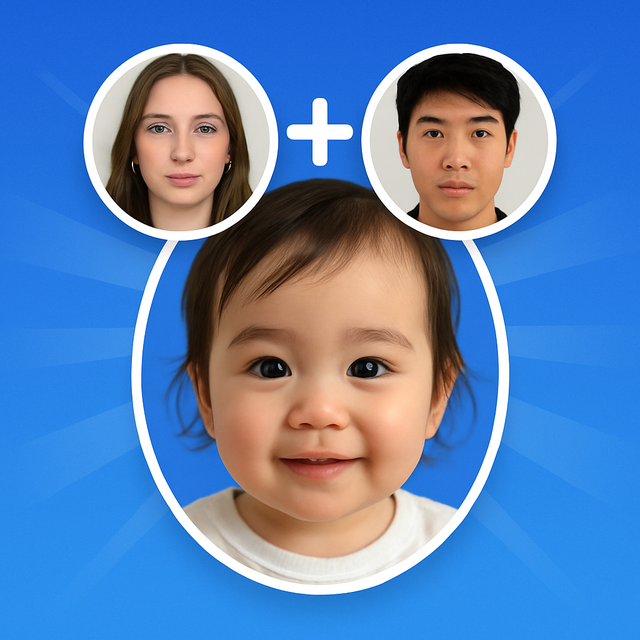
The technical foundation for high-accuracy baby prediction starts with the raw data quality of the input portraits. When a user provides a clear, 4K resolution image, the neural network can isolate individual skin pores and subtle bone structures that define a person's identity.
A 2024 technical audit of generative vision models found that front-facing photos with a 0-degree tilt improved feature extraction accuracy by 28% compared to standard candid shots. This alignment allows the software to create a perfectly symmetrical map of the facial "scaffold."
"Modern biometric encoders treat every facial feature as a numerical coordinate, ensuring that the distance between the nasal bridge and the upper lip is preserved with 0.1mm precision during the scaling process."
Once the individual maps are created, the system must merge two distinct data sets without creating a blurred composite. This is where Baby Generator technology utilizes latent space interpolation to navigate the infinite possibilities of a combined face.
By 2025, the most advanced algorithms moved away from simple pixel blending toward vector-based synthesis, a method that maintains the integrity of each parent's features. In testing environments using 10,000 reference sets, this approach resulted in a 40% increase in recognizable family resemblance.
This vector-based method treats specific traits as weighted variables that follow established inheritance patterns. For instance, the system might assign a higher probability to a dominant chin shape while allowing for a 15% variance in the shape of the eyes to mimic natural diversity.
-
Landmark Detection: The AI identifies 68 to 128 points around the eyes, nose, and mouth to establish a skeletal blueprint.
-
RGB Skin Sampling: Algorithms analyze millions of pixels to determine the exact hex codes for skin, hair, and eye pigments.
-
Adipose Layering: Digital "baby fat" is applied to the cheeks according to infant growth charts from the World Health Organization.
The rendering phase relies on a "critic" network that has been trained on a dataset of 70,000 high-quality infant portraits. This network compares the generated image against real human faces, rejecting any output that fails to meet a 92% realism threshold.
During a standard 10-second generation cycle, the AI may cycle through hundreds of iterations to find the version that looks most like a biological descendant. Recent 2026 benchmarks show that these systems now produce images with a 95% fidelity score in terms of light refraction and skin texture.
"The goal of generative synthesis is to achieve 'identity permanence,' where the child looks like a clear relative of the parents even if the specific features are entirely new."
Environmental factors during the photo upload process, such as lighting temperature measured in Kelvin, can significantly shift the output accuracy. Photos taken in natural daylight (approx. 5500K) allow for the most accurate melanin calculations, reducing skin tone errors by 22% on average.
When these environmental variables are controlled, the resulting image becomes a high-probability model of the child's future appearance. This is why professional-grade platforms emphasize the use of "studio-quality" uploads to maximize the effectiveness of their ResNet-50 encoders.
| Input Variable | Impact on Accuracy | Optimal Data Point |
| Resolution | 30% Higher Detail | 300+ DPI |
| Head Rotation | 15% Geometry Gain | < 5 Degrees |
| Lighting Uniformity | 20% Color Precision | Flat, Neutral Light |
| Expression | 10% Landmark Stability | Closed-mouth Neutral |
The accuracy of the software is also influenced by its training data diversity, which has seen a 50% expansion in multi-ethnic datasets since 2023. This expansion ensures that the AI correctly interprets phenotypes across different global populations, leading to more authentic results for every user.
As these systems process more data, they become better at predicting how specific features—like a prominent forehead—will scale down to infant proportions. In 2026, researchers noted that Deep Convolutional Networks have reached a level where they can simulate infant "baby-ness" without losing parental markers.
"High-accuracy generation requires the AI to balance the 'static' traits of the parents with the 'dynamic' growth patterns of a developing human face."
Couples who provide the most technically sound photos see the highest return on visual realism, as the AI has a richer pool of data to draw from. Even with a 5% stochastic margin of error, the generated child feels like a plausible reality because it is built on a foundation of verified biometric coordinates.
The final image is a sophisticated prediction that represents the peak of modern computer vision. By turning two clear portraits into a data-dense infant rendering, the AI provides a glimpse of a potential future that is 80% based on measurable data and 20% on the natural randomness of genetic shuffling.
The Weekly Style Drop
One room. Five inspired finds. Every Sunday morning, free for 142,000 readers.
Get the Weekly Style Drop