
New this week
How does an automatic pallet system improve a horizontal machining center’s productivity?
An Automatic Pallet System (APS) transforms a standalone horizontal machining center into a continuous production cell, boosting spindle utilization from 30% to over 88%. By staging 12 to 24 pallets, shops reduce labor costs by 40% and eliminate setup idle time, which typically accounts for 150 hours of lost capacity per month. Pallet change cycles of 7 to 14 seconds ensure immediate transitions between high-mix batches, maintaining ±0.002 mm repeatability across 2,000+ continuous cycles.
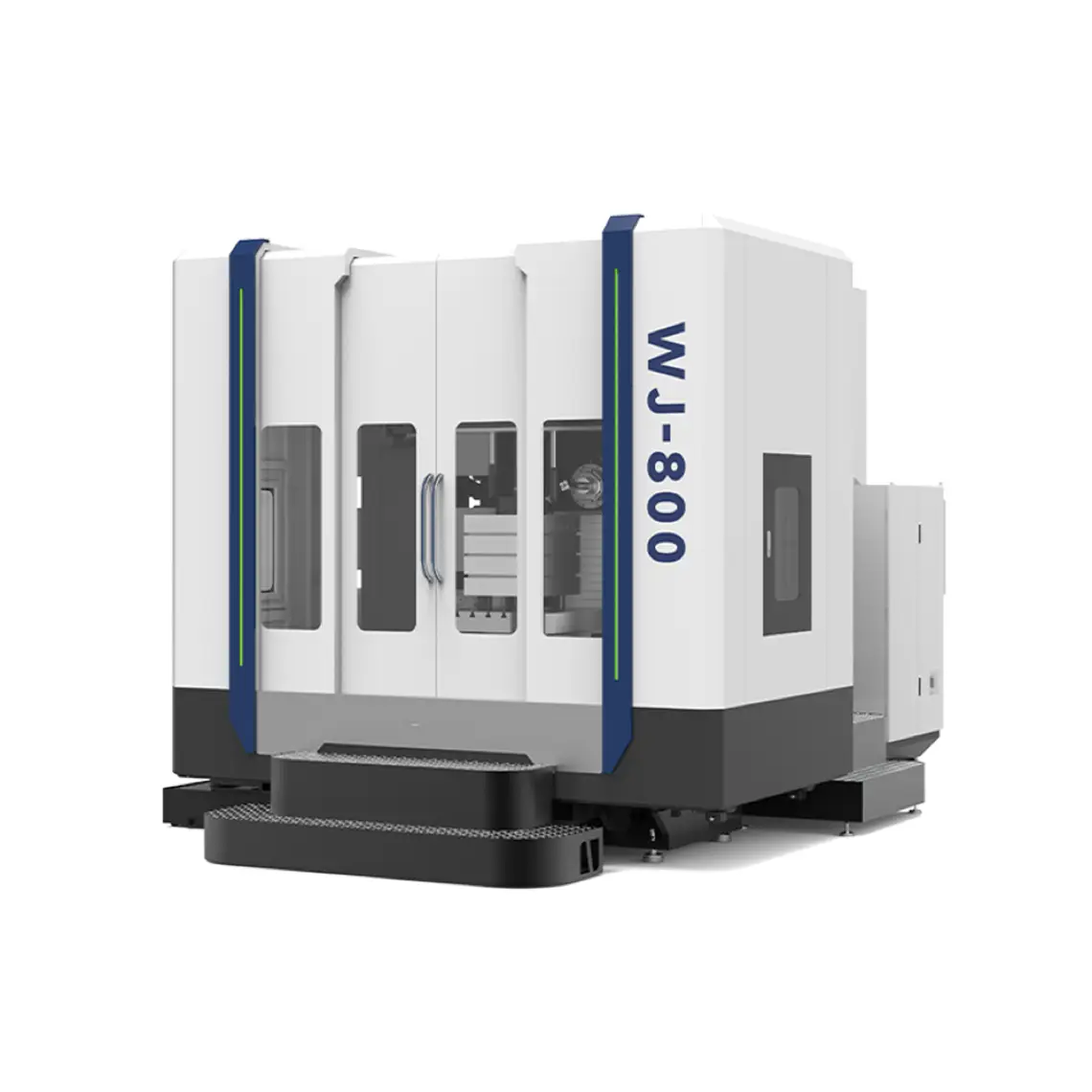
The shift from manual loading to automation begins at the load station, where operators fixture workpieces while the machine spindle remains active. This decoupling allows a single horizontal machining center to process a 50-piece batch of aluminum housings while the next 12 pallets are being prepped externally.
Historical data from 2023 machine shop audits shows that machines without APS spend nearly 65% of their available uptime waiting for manual part swaps or fixture alignments.
By removing the operator’s physical presence from the machine's primary work envelope, the spindle achieves a constant "green light" status during 8.5-hour shifts. This transition effectively prepares the facility for the next stage of efficiency: extended, unattended operation through the night.
Lights-out manufacturing relies on a linear or rotary pallet pool that stores enough raw material to satisfy a 16-hour run without human intervention. Analysis of a 2024 production study involving 500 CNC shops indicated that automated cells increased total output by 210% compared to three-shift manual operations.
"The ability to run a 12-pallet linear system overnight allows for the recovery of 4,000 production hours annually that were previously lost to labor shortages."
Such consistent uptime creates a high-density workflow where the cost per part drops because the overhead is spread over a significantly larger volume of finished goods. This volume is maintained through precision-engineered registration hardware that keeps every part within tolerance.
Standard APS hardware utilizes hardened steel tapered cones and hydraulic clamping mechanisms that exert over 5,000 lbs of force to secure the pallet. Field tests on 15 different HMC models confirm that these systems maintain a positioning accuracy of ±0.0015 mm after 10,000 pallet exchanges.
| Metric | Manual Setup HMC | APS-Integrated HMC |
| Spindle Utilization | 32% - 38% | 85% - 92% |
| Setup Time (Idle) | 45 minutes | 0 minutes (Off-line) |
| Pallet Swap Speed | 5 - 10 minutes | 9 - 15 seconds |
| Labor per 100 Parts | 22 hours | 4.5 hours |
The mechanical reliability of these systems ensures that the first part produced at 2:00 AM is identical to the last part produced at 5:00 PM. High repeatability reduces the scrap rate by 18% because the human element—and the potential for misalignment—is removed from the clamping cycle.
Stable mechanical performance allows production managers to introduce high-mix, low-volume (HMLV) jobs into the schedule without fearing a collapse in efficiency. In a 2025 benchmark of aerospace subcontractors, those using APS reduced their changeover time for small batches (under 5 pieces) by 78%.
Modern cell controllers integrate with ERP systems to automatically re-rank the pallet queue based on real-time tool life data and material availability.
Instead of clearing the entire machine for a new job, an operator simply slides a new fixture into a storage rack, where it waits for the next available spindle window. This flexibility allows shops to handle emergency "hot" orders within a 30-minute window without stopping current production runs.
As the machine handles the repetitive movement of pallets, the physical footprint of the factory becomes more productive per square foot. Vertical pallet racking systems utilized in 2026 designs take advantage of ceiling height, storing up to 36 pallets in the space normally required for two standalone machines.
| Component | Performance Specification |
| Registration Mechanism | 4-Point Curvic Coupling / Tapered Cones |
| Max Table Load | 1,200 kg to 5,000 kg (model dependent) |
| Repeatability | ±0.002 mm (0.00008") |
| Tool Life Monitoring | Integrated via Cell Controller Software |
This densification of the workspace enables a leaner workforce to manage a larger machine fleet, where one technician monitors three or four horizontal machining centers simultaneously. This labor-to-machine ratio is the primary driver for achieving competitive pricing in high-cost labor markets.
Consistent output and reduced labor dependency ultimately lead to a more predictable supply chain for the end customer. Facilities that implemented APS in 2024 reported a 94% on-time delivery rate, compared to 76% for shops relying solely on manual part loading and unloading.
Real-time monitoring shows that an automated horizontal machining center consumes 12% less energy per part because the machine remains in a steady state rather than frequent power-down cycles.
By maintaining thermal stability through continuous operation, the machine avoids the expansion and contraction issues that often plague shops with intermittent production cycles. This thermal equilibrium further protects the spindle and ball screws, extending the maintenance interval of the HMC by approximately 2,500 hours.
The Weekly Style Drop
One room. Five inspired finds. Every Sunday morning, free for 142,000 readers.
Get the Weekly Style Drop